the language between us
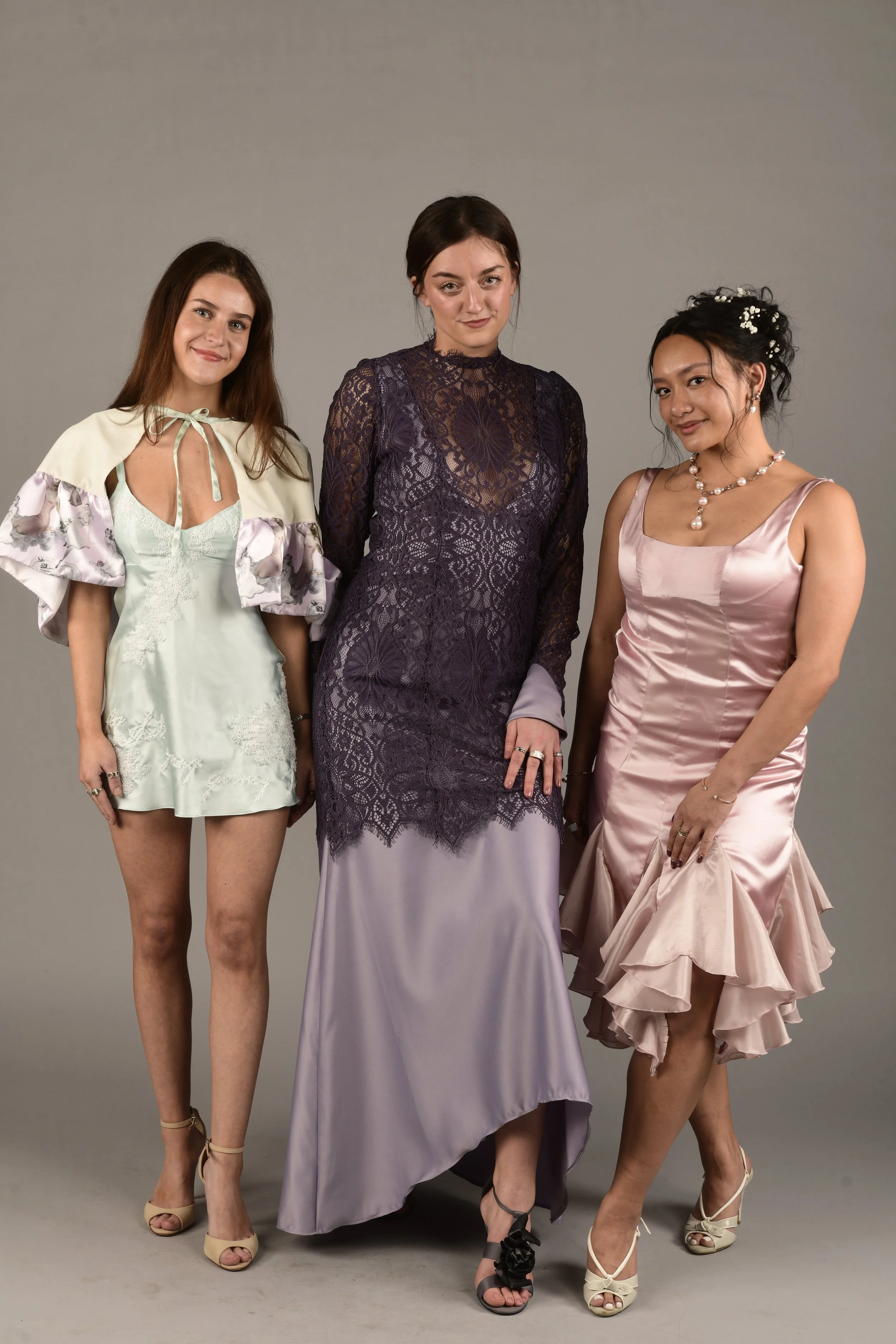
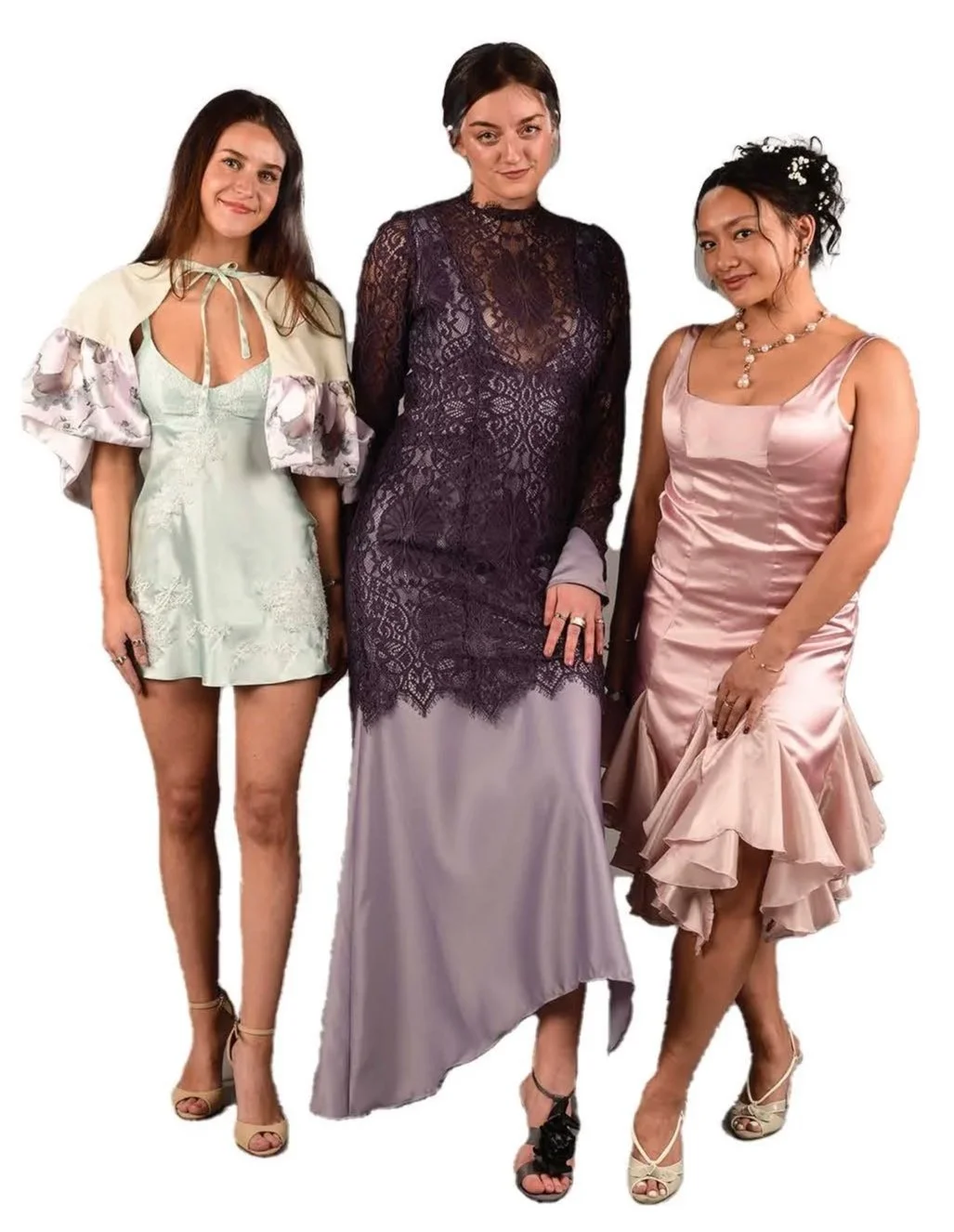
This is a five look collection where I explored what femininity means to me.
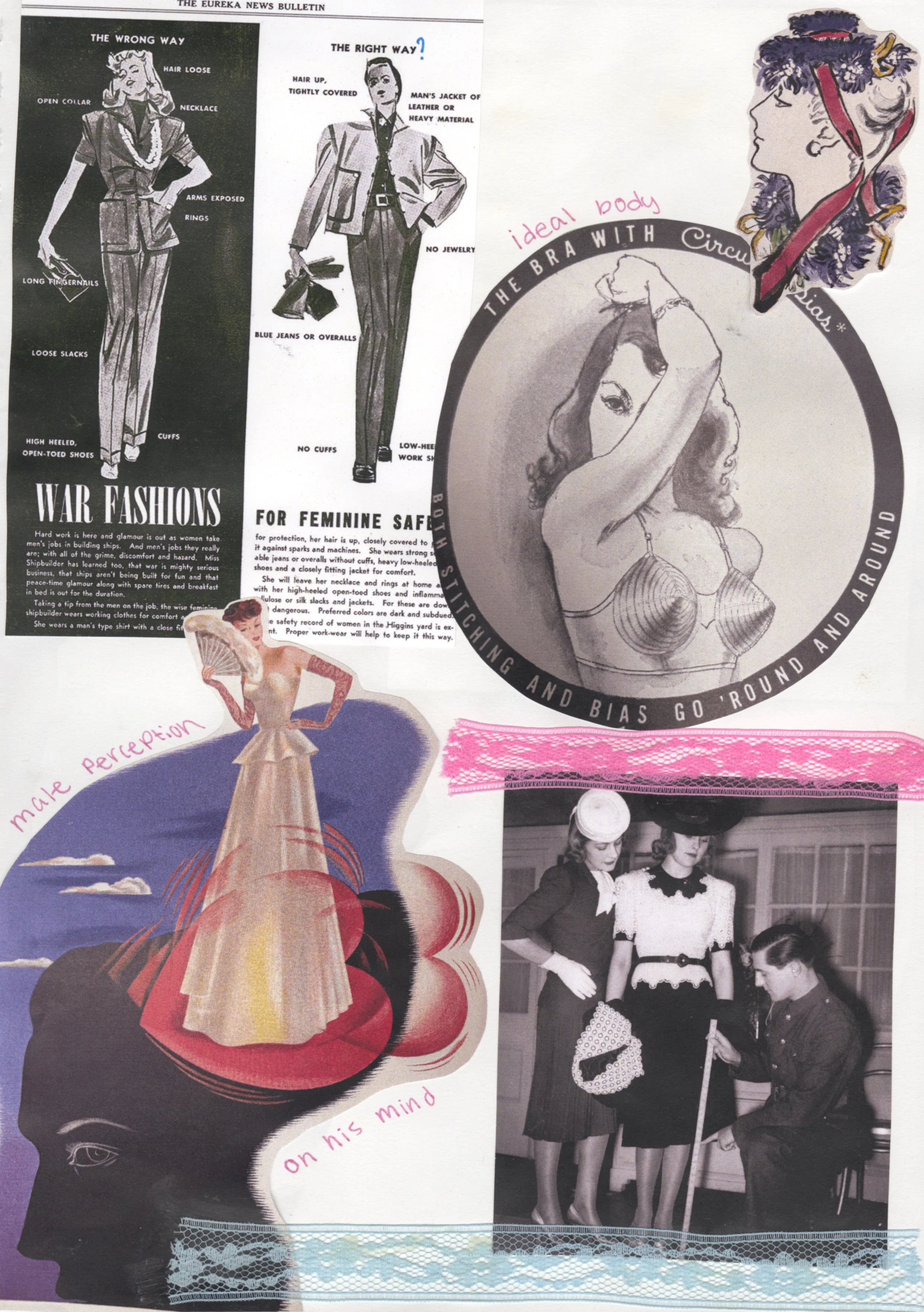
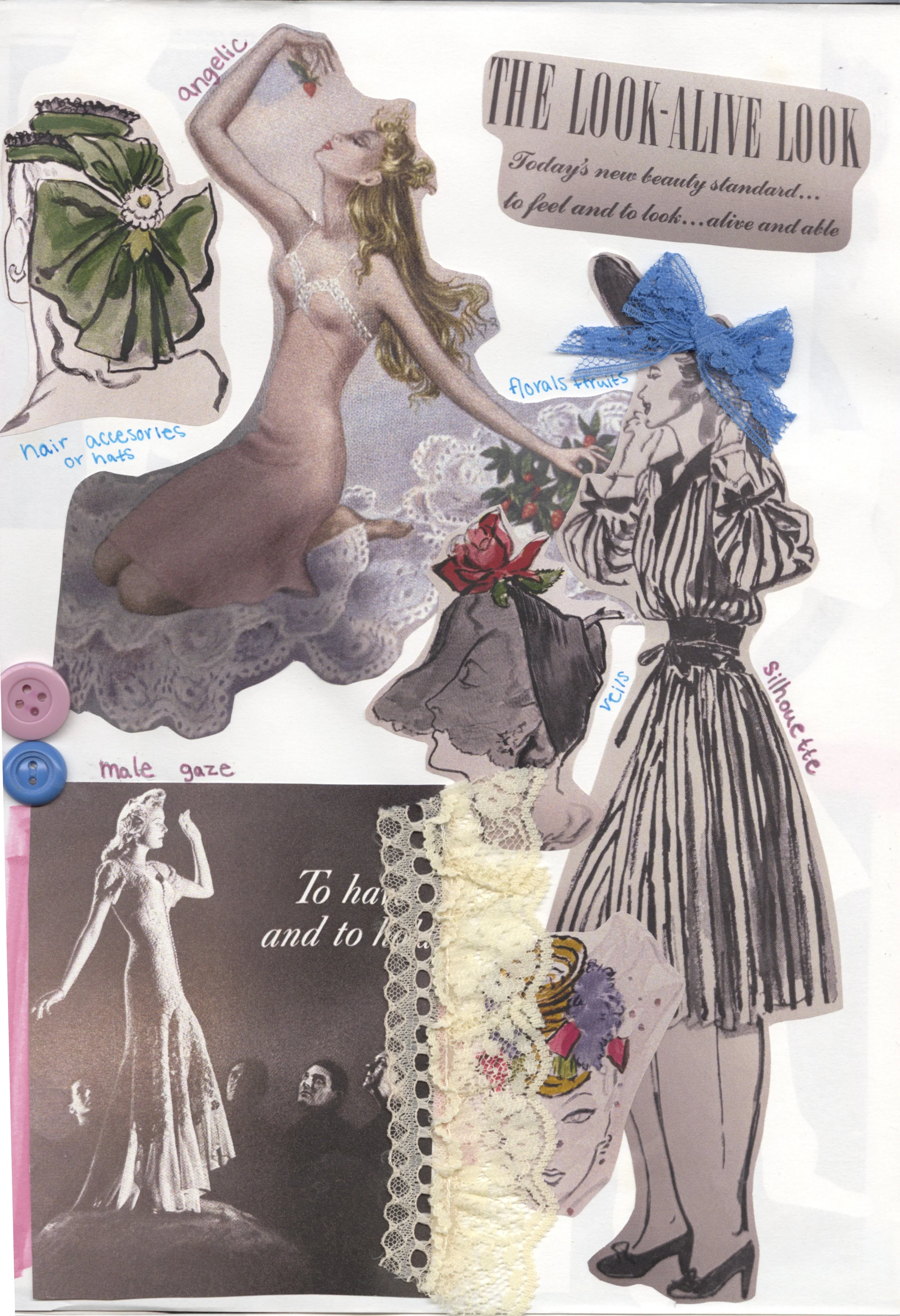
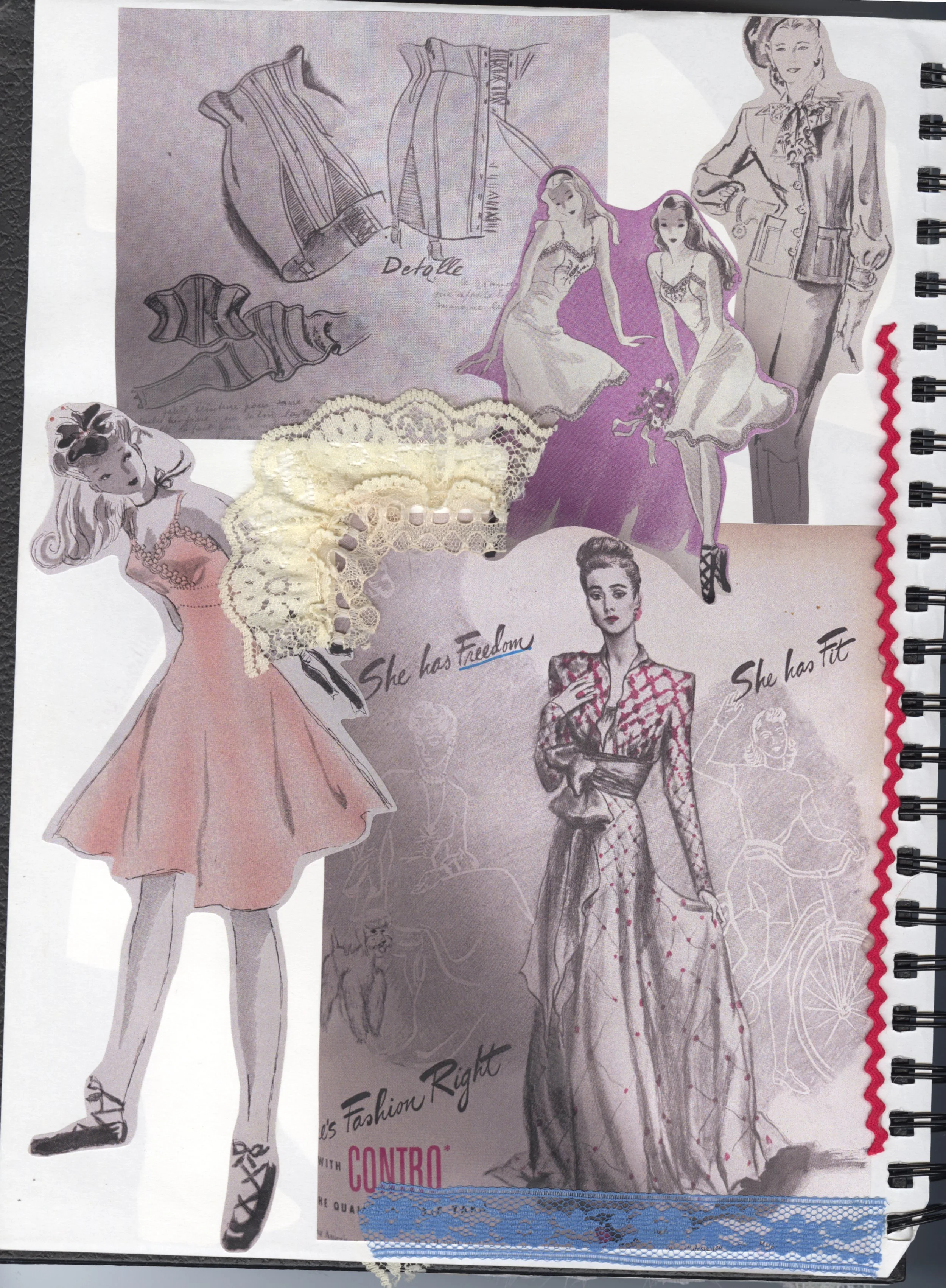
While searching for inspiration I stumbled upon Massart’s collection of vintage magazines. I was initially inspired by the retro aesthetics, but the closer I looked the more I noticed the messaging. Every page featured a different sexist message about a women’s role, the ideal body type, and the beauty standards for women. As I read these messages, some from magazines published almost a century ago, I couldn’t help but think a lot of this dated messaging is still present today. I realized I couldn’t make a collection about exploring femininity if I didn’t address the misogyny that is still so prevalent.
Scans from my design journal where I captured inspiration from vintage magazines
Thesis Collection:
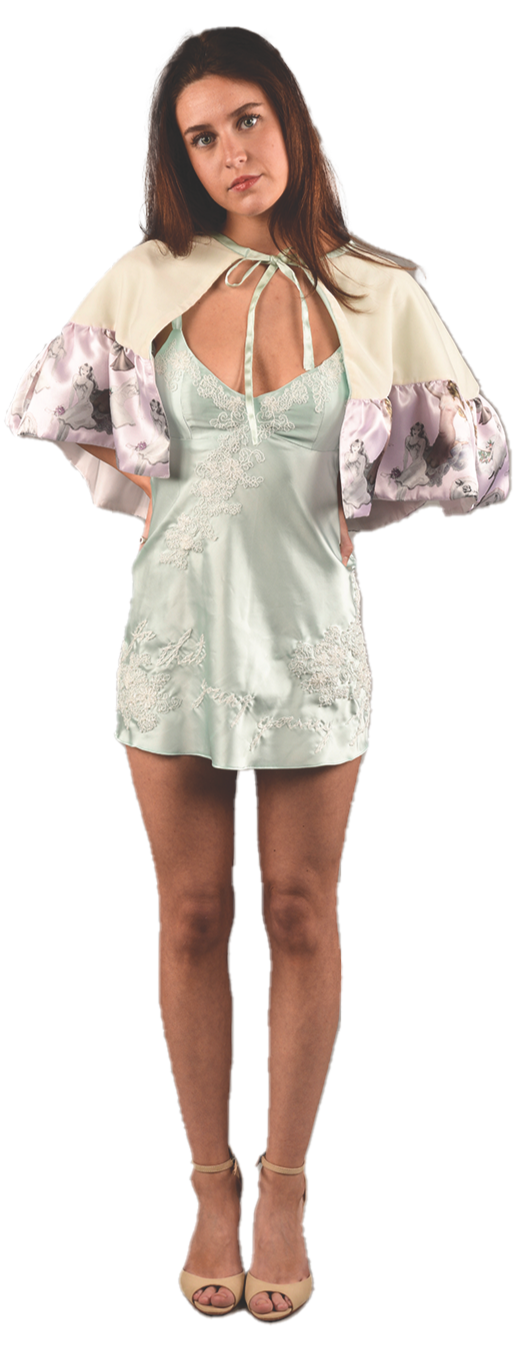
Look 1
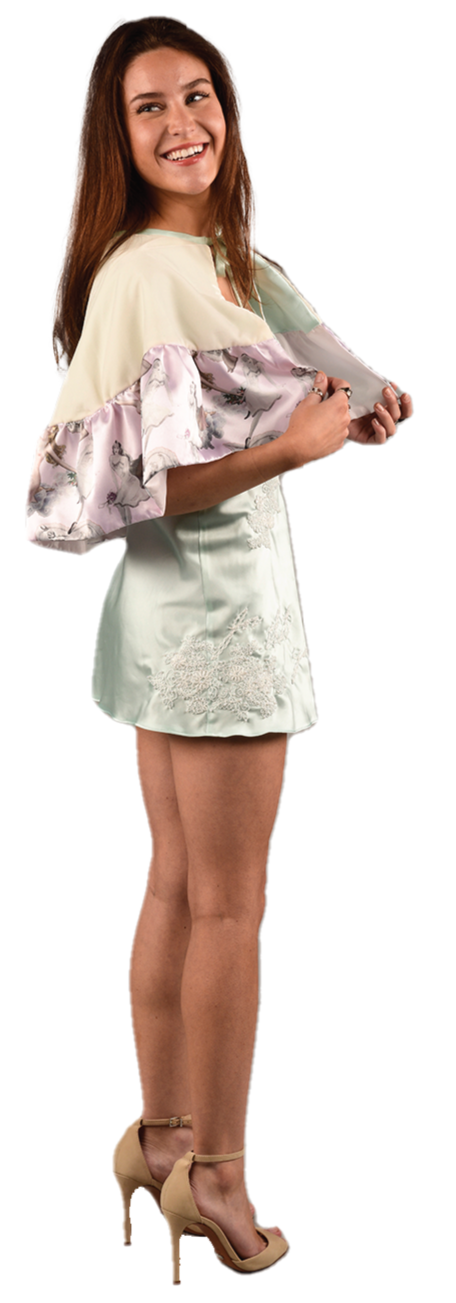
This look confronts the sexualization of women from an alarmingly young age — a theme drawn from extensive research into personal memoirs, where countless female authors recount the jarring, often wordless transition from being seen as a child to becoming an object of desire. The entry point is intentional: the lingerie-inspired slip draws the viewer in with its sensuality, but rewards a closer look with hidden messaging woven into the design. The tension between what is immediately seen and what must be discovered mirrors the experience so many women describe — a shift that happens to them, without warning, without consent.
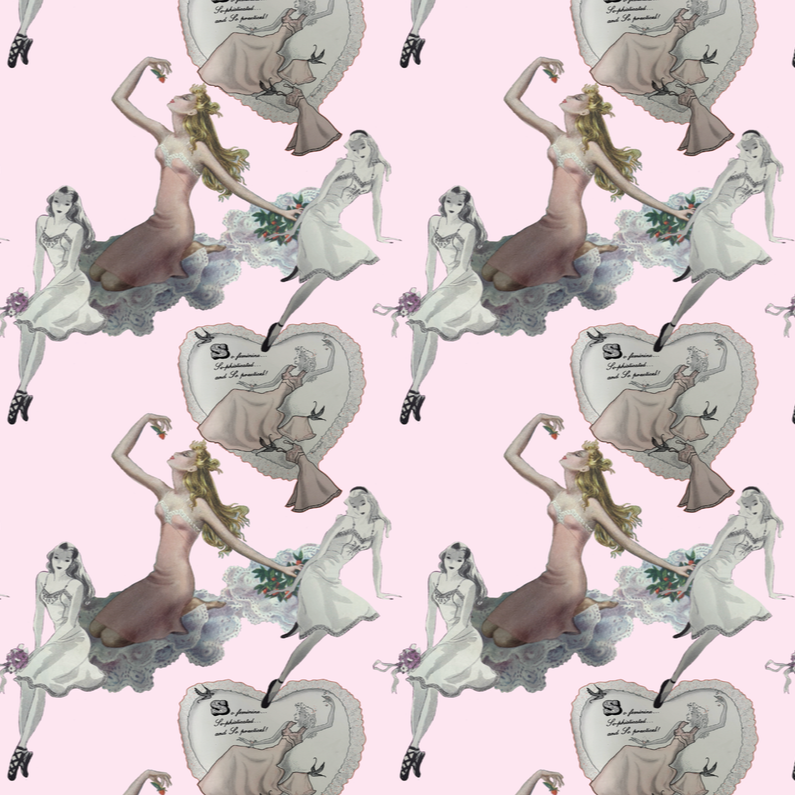
A print created from vintage magazine scans. The hand embroidery speaks for itself — pulled straight from the source, it reads: 'for that young, young look.'
Look 2
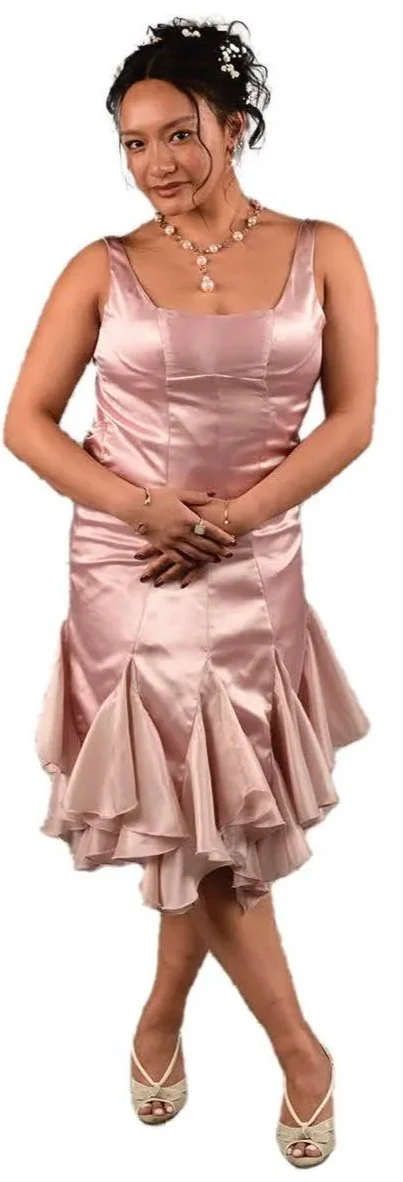
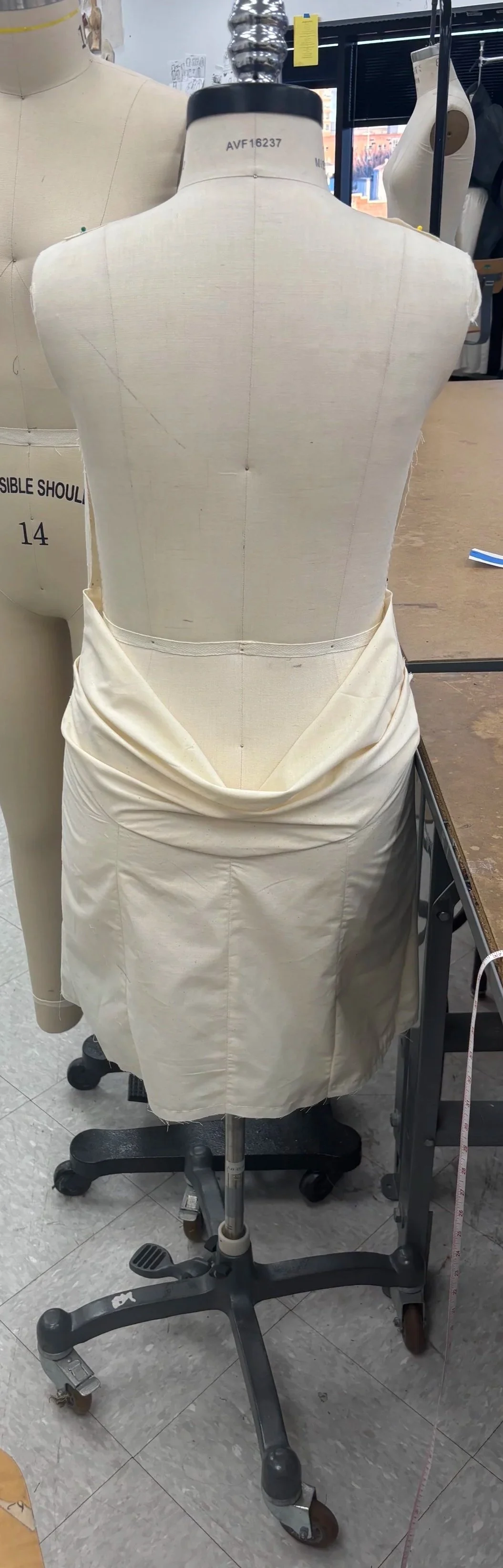
The second look confronts the male gaze directly. An organza back panel anchors the piece, featuring an embroidered and beaded motif that places the concept at the center of the design
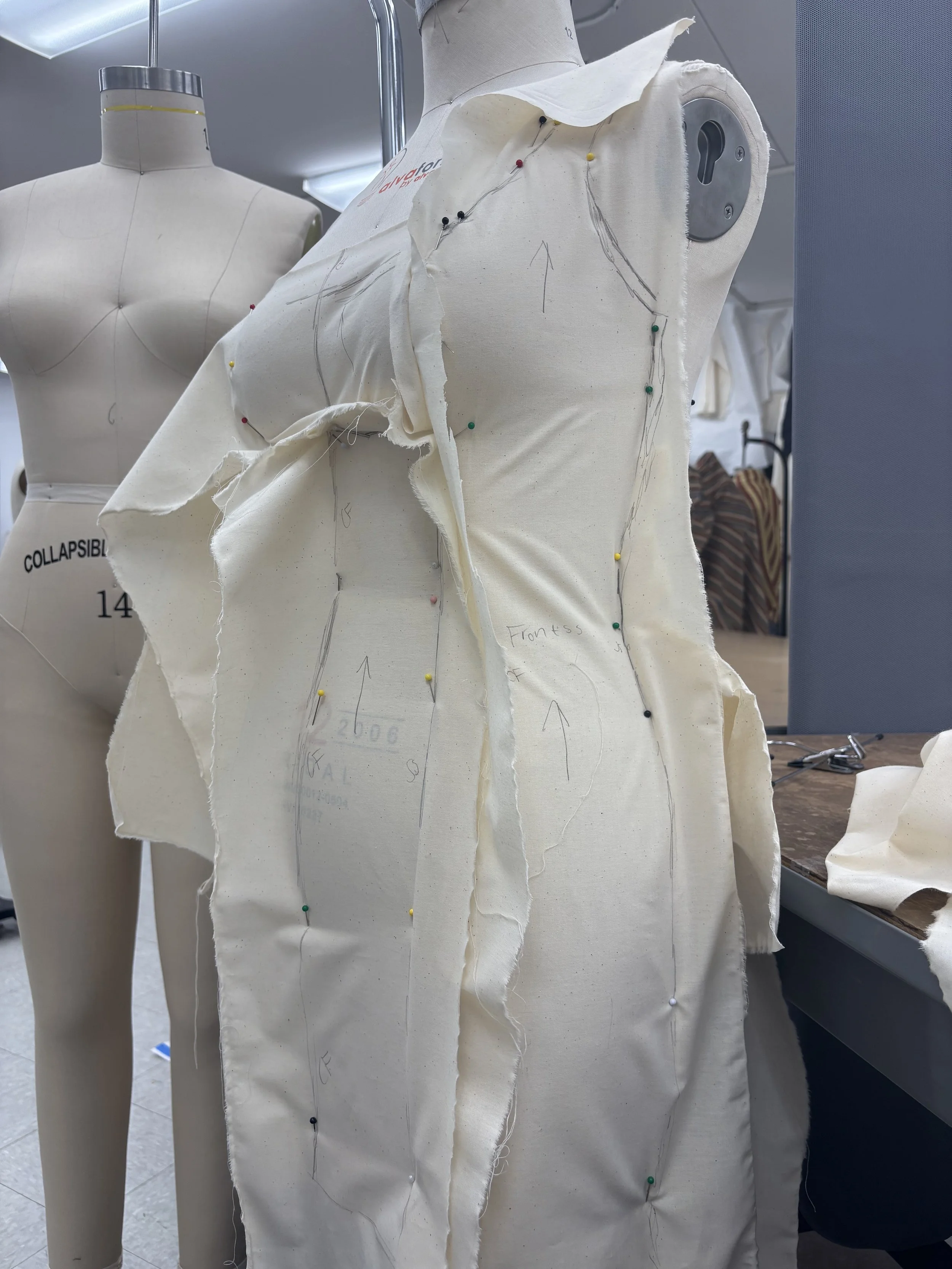
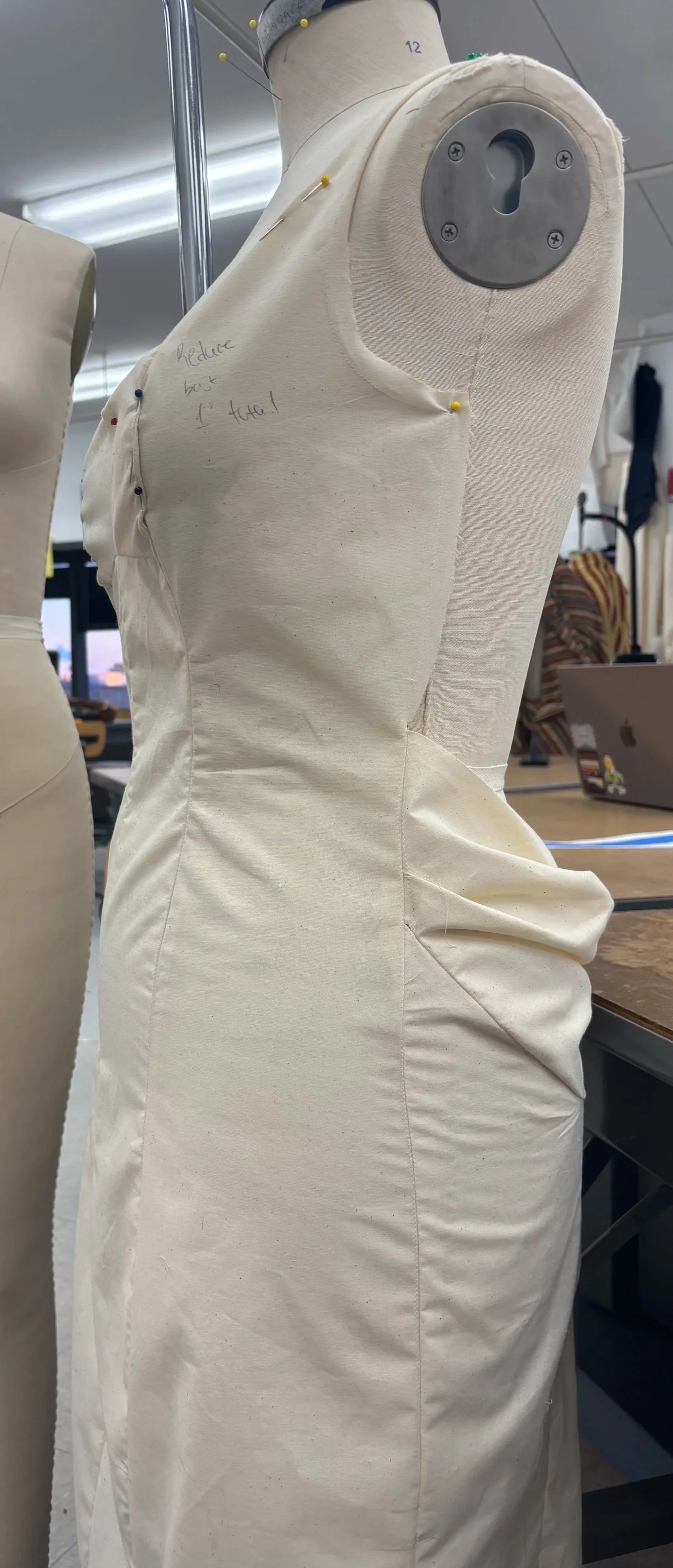
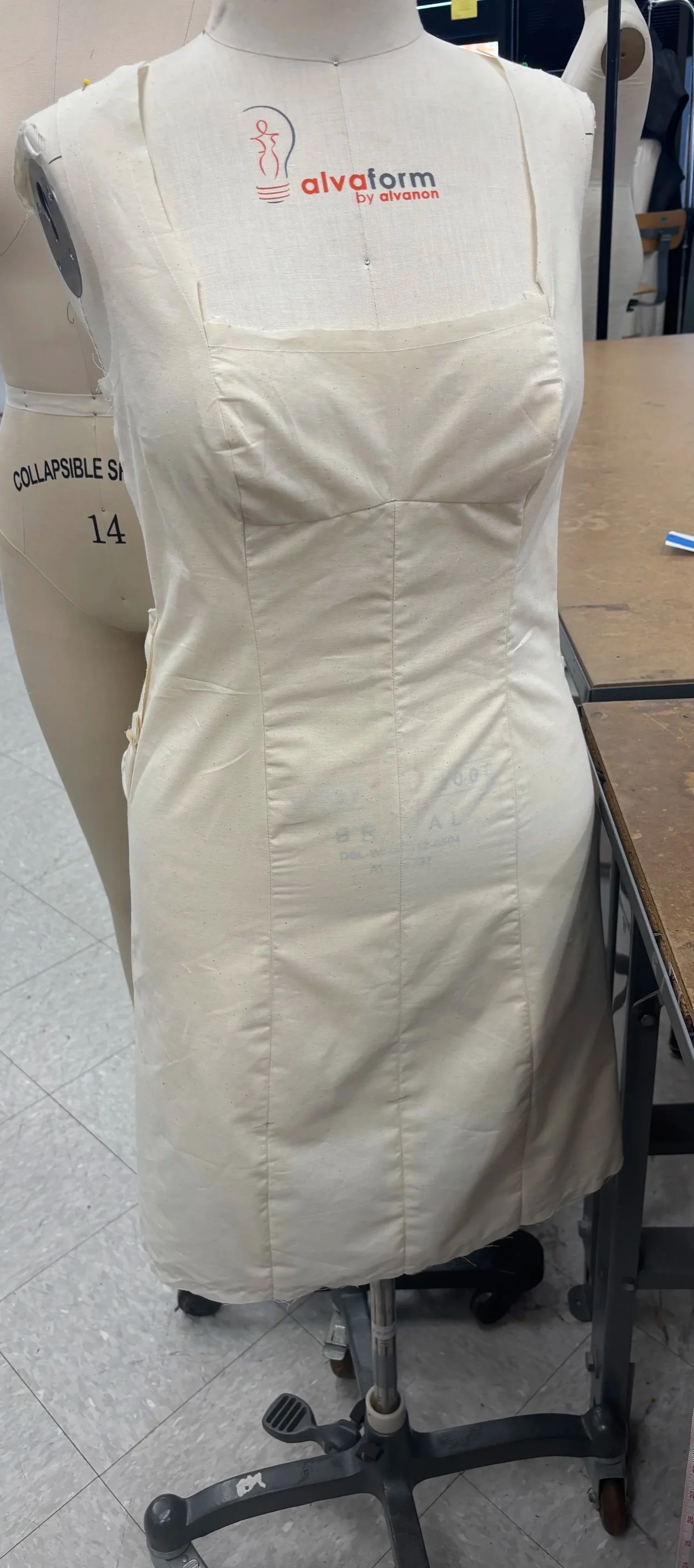
Toile Development
Look 3
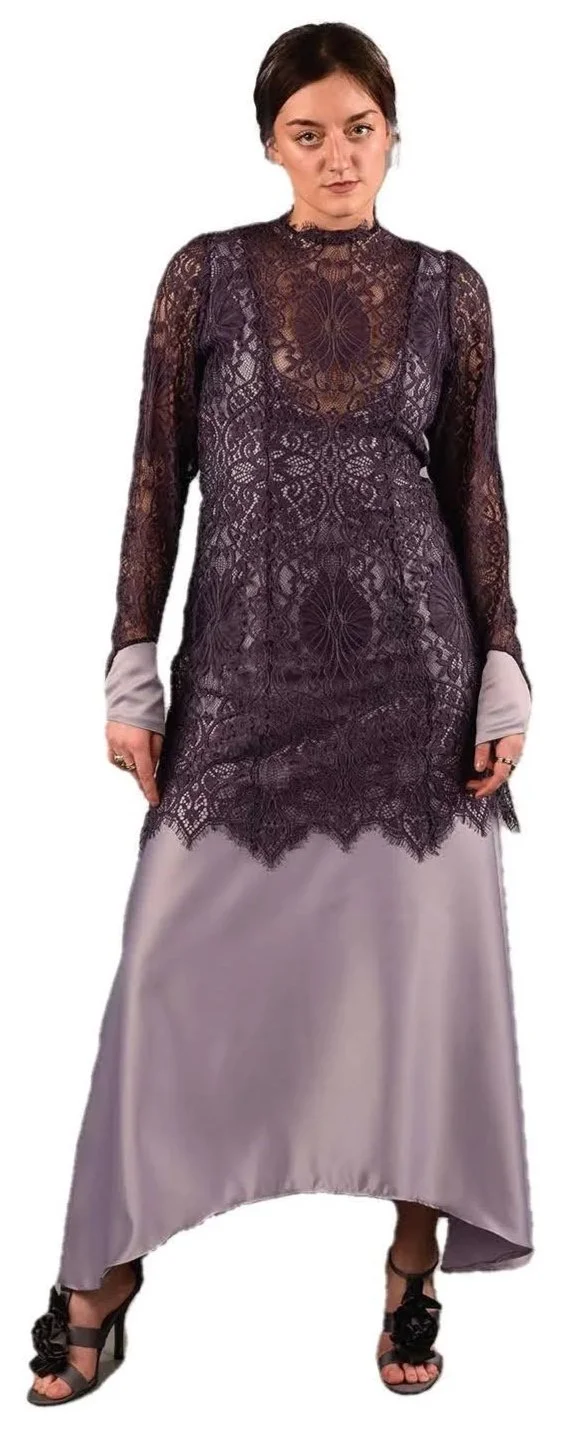
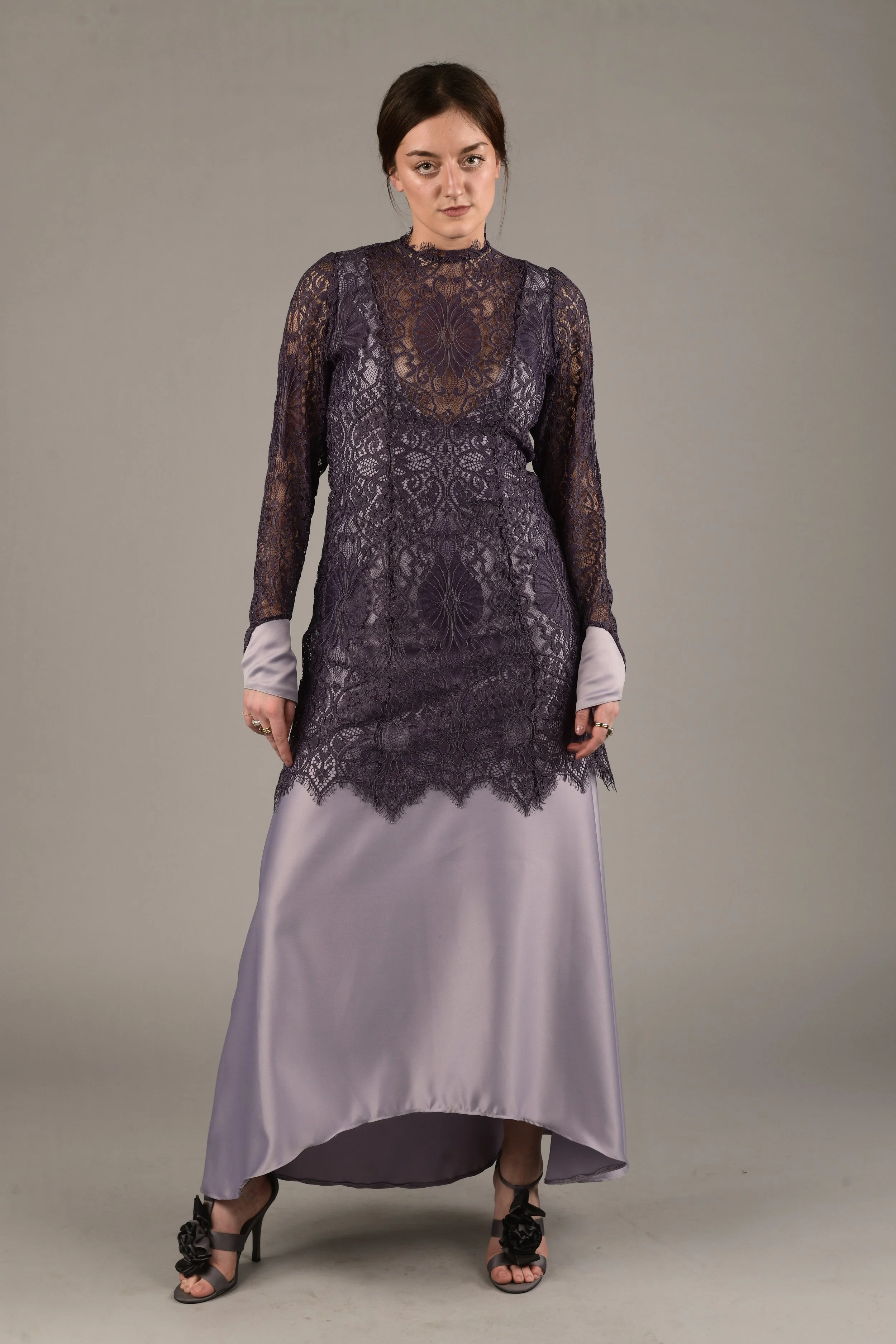
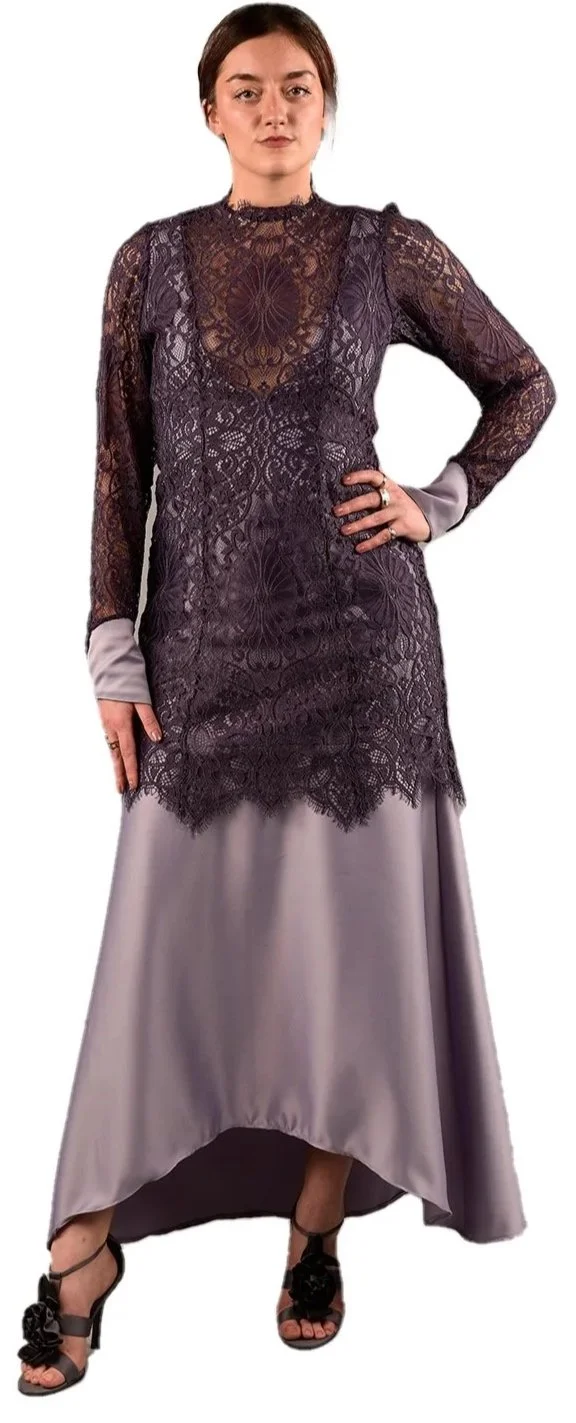
Vows have always doubled as contracts. The third look stitches that truth into the garment — 'til death do us part' in lace at the hem, 'to have and to hold' embroidered into the cuffs. Both phrases lifted from vintage bridal advertisements that sold control as devotion.